

Grow Not Mow is an ongoing, volunteer-powered initiative by the Doan Brook Watershed Partnership (DBWP) that restores and enhances biodiversity along the Doan Brook floodplain. By reducing the areas that are regularly mowed and replacing them with native plantings, the program creates healthier habitats for pollinators, wildlife, and people. These restored spaces also play a critical ecological role by absorbing and filtering stormwater runoff, preventing soil erosion, and reducing greenhouse gas emissions associated with frequent mowing.
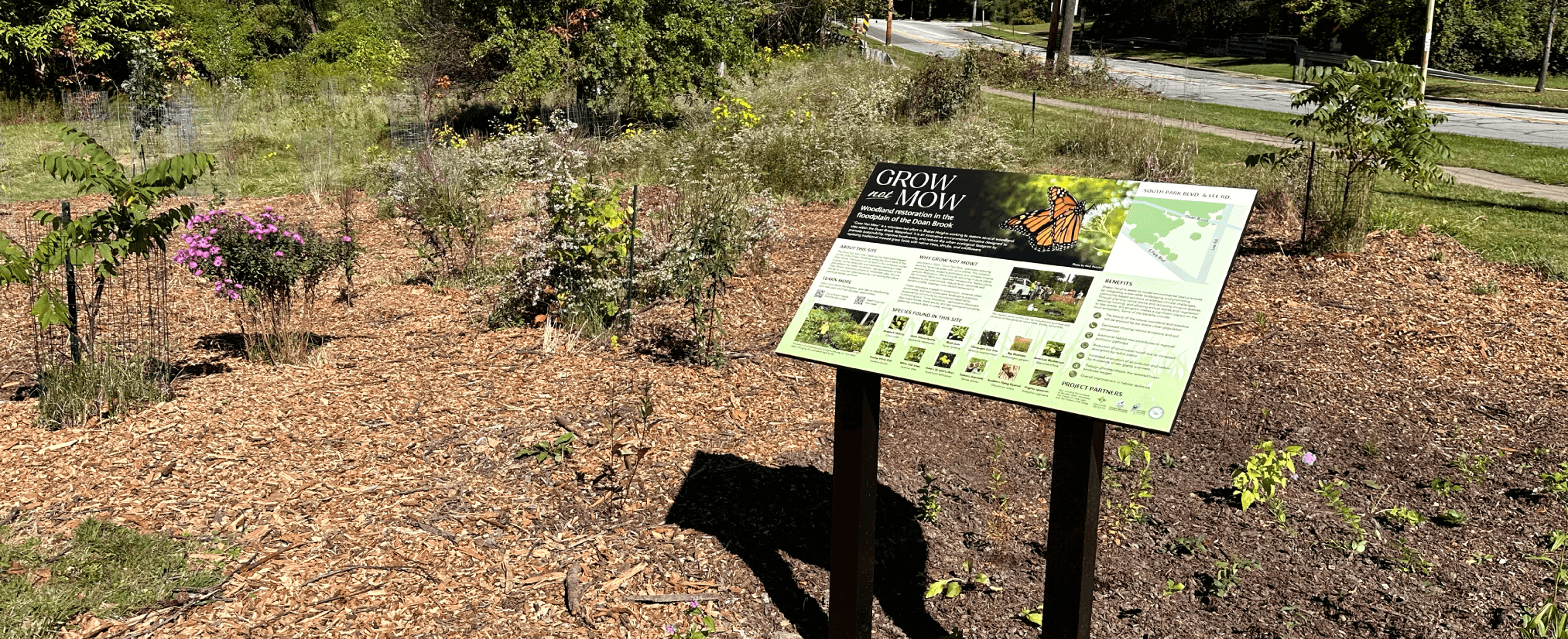
Lupine Studios was invited to design two interpretive signs for key Grow Not Mow sites. The goal was to create signage that not only explained what visitors were seeing, but why these landscapes matter—transforming unfamiliar, meadow-like spaces into places of curiosity, care, and shared stewardship.
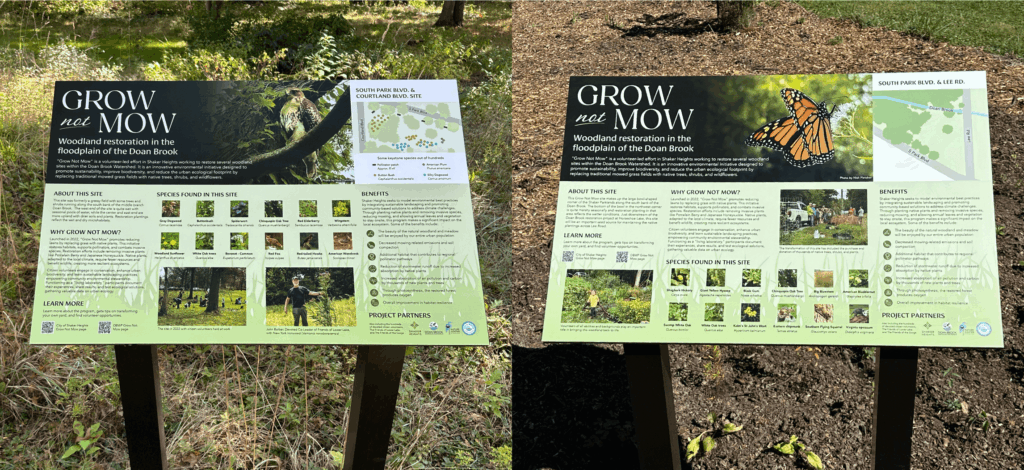
Collaborative Design Process
Our design process began with close collaboration with the DBWP team to understand the ecological goals of the Grow Not Mow program, the needs of volunteers, and the questions most commonly asked by the public. Together, we developed sign concepts that balanced scientific accuracy with approachability, ensuring the information was accessible to a wide audience while still honoring the complexity of the ecosystem.
Content development focused on highlighting native species planted on-site, the role of volunteers in maintaining these spaces, and the broader environmental impact of letting landscapes grow. DBWP provided ecological expertise and program insights, while Lupine Studios translated this information into clear visual hierarchies, concise language, and engaging illustrations.
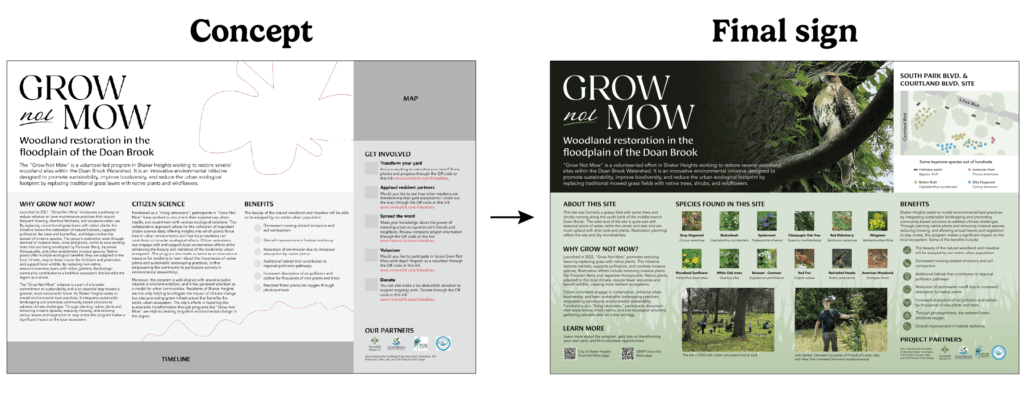
Design Choices
Each sign was designed to feel welcoming, informative, and place-based. We used a clean, readable layout with strong visual contrast to ensure legibility outdoors, even at a distance. Species images and plant lists help visitors identify what they see in front of them, while photographs of volunteers reinforce the community-driven nature of the project.
The color palette and typography were chosen to complement the surrounding landscape, allowing the signs to feel integrated into the environment rather than imposed upon it. QR codes and resource links provide pathways for deeper learning, inviting visitors to continue engaging with DBWP beyond the site itself.
Impact
The Grow Not Mow signs serve as a bridge between restoration work and public understanding. By clearly communicating the purpose and benefits of these spaces, the signage helps foster appreciation, reduce confusion or concern about unmowed areas, and encourage community participation.
This project reflects Lupine Studios’ commitment to using thoughtful design as a tool for environmental education—supporting organizations like DBWP in making ecological restoration visible, valued, and understood.

Level up your visuals with this easy-to-follow guide
Learn More about the Checklist