

The Exhibit
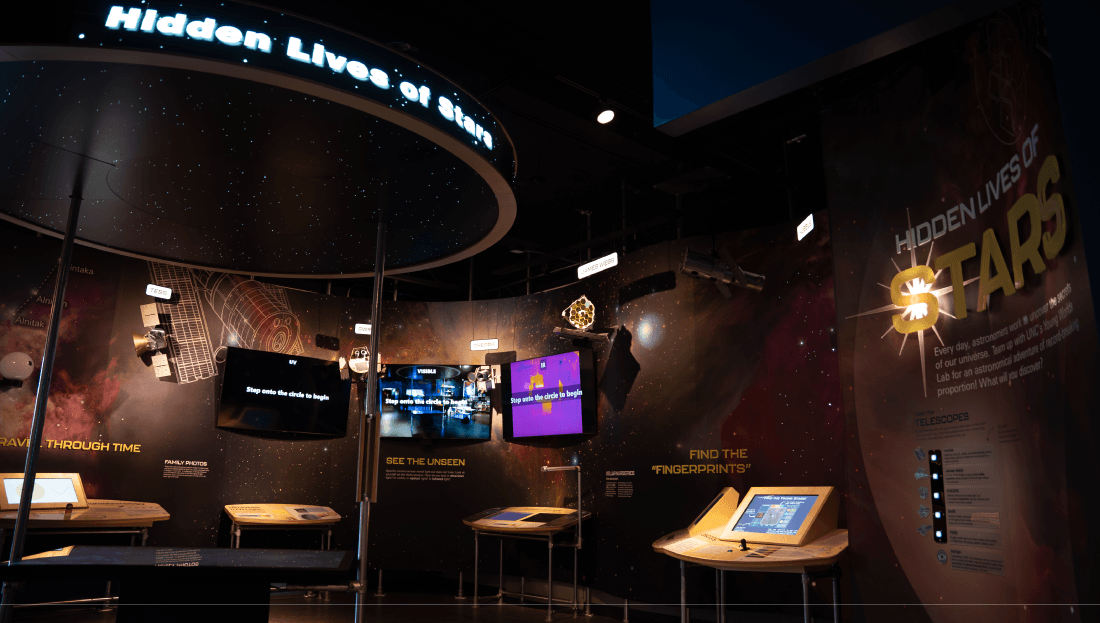
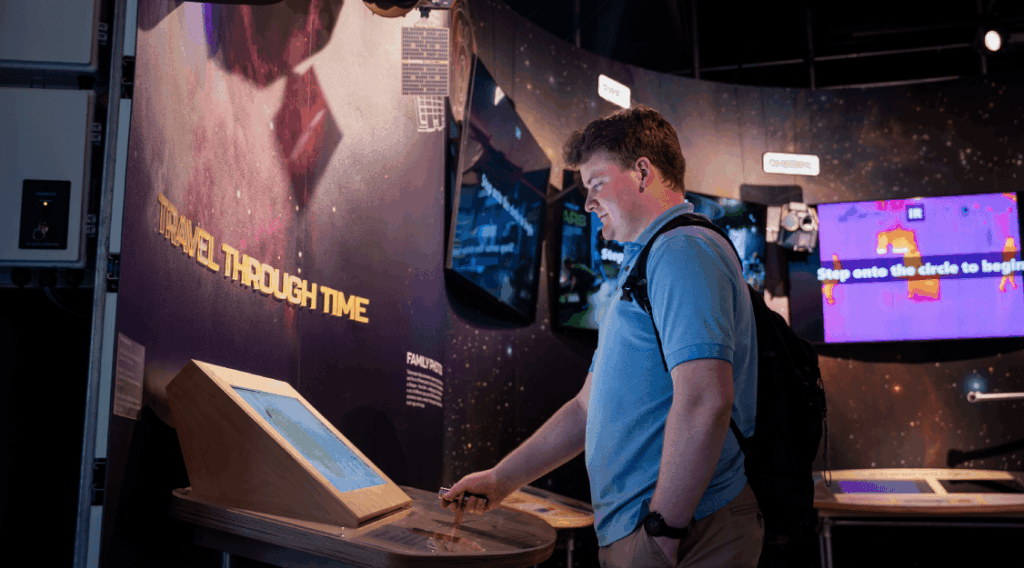
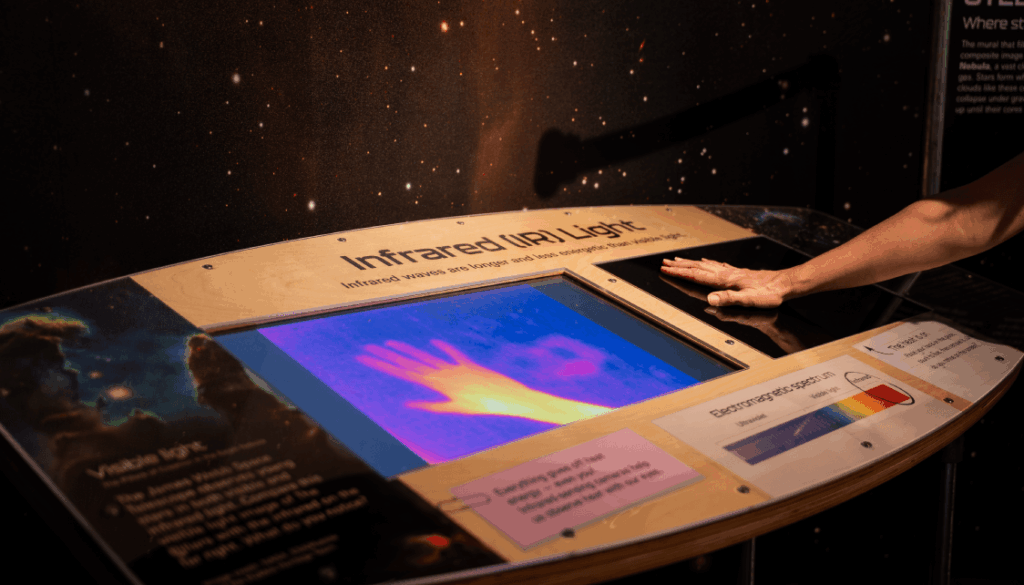
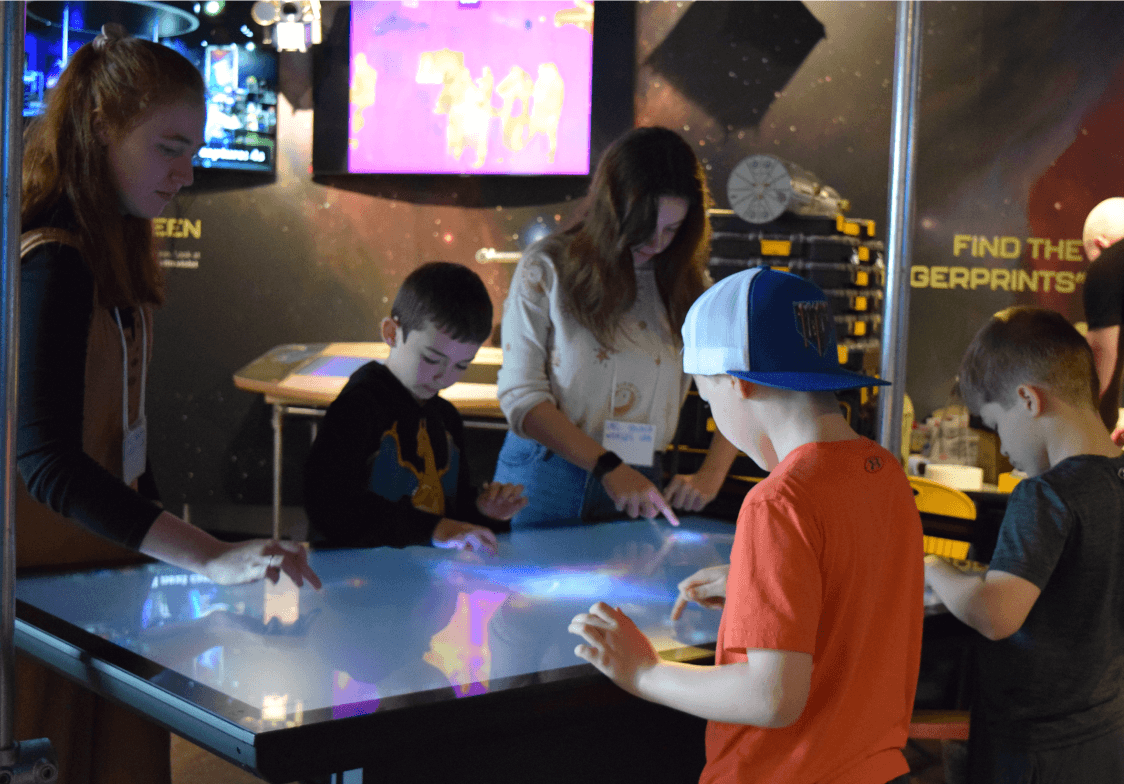
Hidden Lives of Stars invites visitors into the full arc of a star’s life, from swirling nebulae to the planetary systems they shape. At UNC’s Morehead Planetarium and Science Center, the interactive exhibit puts real research tools in visitors’ hands: space-based telescope simulations, light experiments, and stellar phenomena they can trigger themselves.
Lupine’s role was the complete graphic environment: interpretive panels, data visualizations, and vast, immersive murals. Every piece was designed to work in close dialogue with the architecture and physical interactives built by One Bit Design.
Rooted in Real Research
This exhibit didn’t pull from textbooks. It was built on active science happening two miles away, inside UNC Chapel Hill’s Young Worlds Lab, a research group led by Dr. Andrew Mann dedicated to finding and studying the youngest planetary systems in the galaxy.
The Young Worlds Lab, Dr. Andrew Mann
Research Partner — UNC Chapel Hill
The Young Worlds Lab hunts for planets in the earliest stages of formation — using NASA’s TESS mission, ground-based telescopes, and custom detection algorithms to find worlds that are, cosmically speaking, newborns. Their work asks foundational questions: How quickly do planets form? What were they like before they settled into their final orbits? What can young atmospheres tell us about the origins of our own solar system?
The data, visuals, and scientific narratives throughout Hidden Lives of Stars were drawn directly from the lab’s ongoing work, including a finding that made international headlines just before the exhibit opened.
Designed Like a Lab, Not a Museum
The central design challenge was this: how do you make frontier astrophysics feel welcoming to a seven-year-old and genuinely interesting to their parents at the same time? The answer was to lean into the lab itself — not a slick, produced version of science, but the real, messy, handwritten, coffee-stained process of discovery.
Every graphic decision was filtered through one question: does this feel like it came from a working researcher’s desk? The result is a visual language that makes hard science feel immediate and alive.
Creative Problem-Solving on a Scrappy Budget
Tight timelines and a lean budget meant building fast, iterating often, and trusting the collaboration. Working step-by-step with One Bit Design’s architectural vision, we developed a graphic system flexible enough to span large environmental murals and small-format instructional panels, unified throughout.
Rather than treating constraints as obstacles, they became the engine of invention. The same community-minded approach that brought university researchers into the exhibit development process shaped how the design work unfolded: honest, scrappy, and better for it. The result exceeded early expectations and has become a template for Morehead’s future exhibit development.
Reach & Impact
Hidden Lives of Stars isn’t a temporary installation. It’s a permanent, living part of Morehead’s educational ecosystem — woven into every program, field trip, and summer camp that comes through the doors.
- General admission anchor: The exhibit is now a named feature of Morehead’s general admission experience, listed alongside flagship programs as a core reason to visit.
- Integrated into camps and field trips: Morehead’s summer science camps and school group programs reach thousands of children annually. Hidden Lives of Stars is embedded in those visits as curriculum-linked content.
- A template for future exhibit development: The process — lean, collaborative, community-rooted — is being used as a model for how Morehead approaches future builds.
- Connected to living science: Because the exhibit draws from the Young Worlds Lab’s active research, it will continue to reflect genuine discovery, not a frozen snapshot, but an evolving conversation with real astronomers.
A Conversation Worth Having
The story behind Hidden Lives of Stars became a case study in its own right. Lupine founder Evyn Caiazza joined Michele Kloda (Morehead) and Chris Bitsas (One Bit Design) at the 2026 North Carolina Museums Council Conference to share how it was done — and why it matters for the field.
The panel offered a candid look at how universities, local designers, open-source toolkits, and genuine community partnership can produce richer experiences — even as budgets shrink and pressure on museums intensifies. The session left participants with tools and frameworks they could apply to their own institutions.
All exhibit architecture and physical design by One Bit Design. Lupine Studios developed the graphic environment only. This project is a testament to what close cross-disciplinary collaboration between scientists, architects, and illustrators can produce when everyone is working toward the same mission.
Photography on this page is provided by Jeffrey Davis Chay/UNC-Chapel Hill.

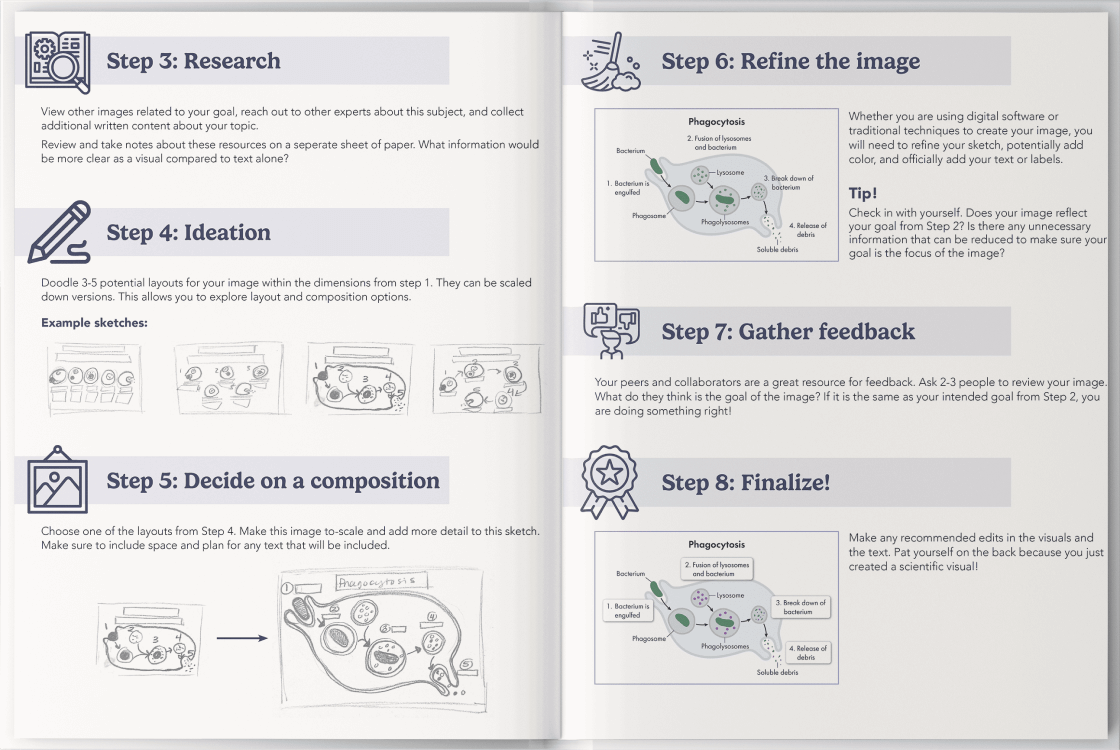
Level up your visuals with this easy-to-follow guide
Learn More about the Checklist