

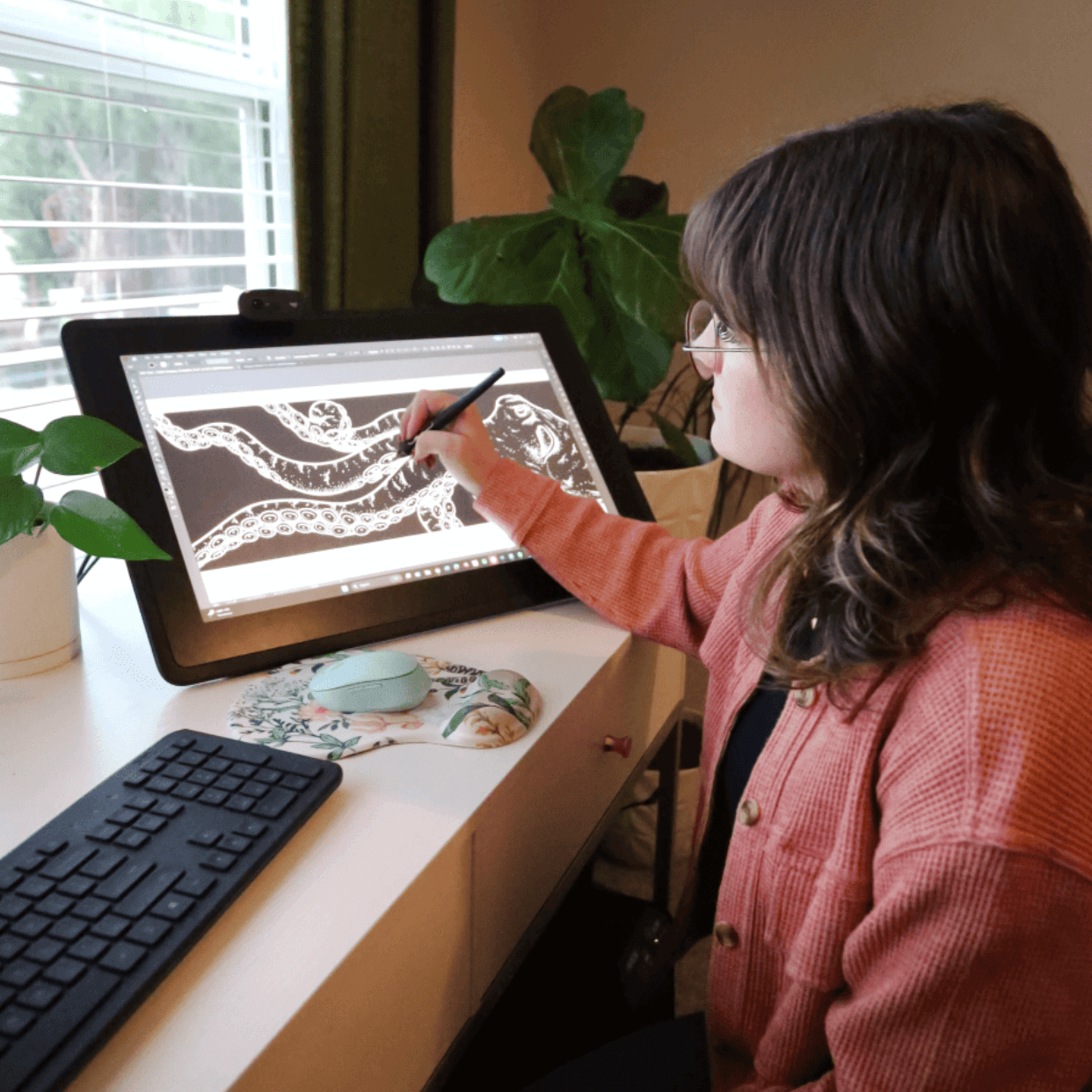
Join Evyn Caiazza, Founder & CEO at Lupine Studios, and Ren Slagel, Social Media & Marketing Intern, as they discuss Evyn’s career as a scientific illustrator and business owner.
How would you describe a typical day as a scientific illustrator?
I think it changes day to day and I think that’s why I like it so much. So there are some days where I’m just working on client projects, whether it’s actual illustrating or I’m working on design work for an exhibit project, but there are also days where I’m going on site and visiting different museums to work one on one with clients.
I do track all of my hours, so I can actually give you a very accurate answer for how I spend my time. I spend about 60% of my time working on client work. That is things like illustrating and doing actual design work; really anything where I’m actively working on a project. The other 40%, I am managing contractors and interns and hopping on emails and visiting locations and doing project management things rather than just doing design work. I work with a lot of animators, illustrators, 3D modelers and so a lot of my job is making sure everyone is on the same page.
What drew you to this niche career?
I actually didn’t think I was going to be a business owner which has been part of this whole journey. I started my business just as a freelancer. I have always been really interested in art and science, so before coming into this as a career, I was going to be a science teacher. My mother was a professor for most of my childhood, and watching her work with students at a college level was always really inspiring to me.
I was lucky to have a really good mentor at the time who showed me that scientific illustration was an option because I didn’t even know it was an option until then. For the last, almost decade, I’ve been doing this work so I’m just really grateful for that.
What did you do to prepare yourself for this career?
I jumped into what was called a pre-college program at the Cleveland Institute of Art where you could basically test out majors. I did mine in biomedical illustration and immediately I was like “oh my God this is amazing” and that’s what I ended up getting my undergraduate degree in. While I was in undergrad, I focused a lot on exhibit development and visitor experiences with science. So “how does the lay audience understand science” was my main point of interest in undergrad and by the time I got to graduate school I just dove into this topic even further. I got my masters in visual communication design.
I think that from the beginning, once I realized that this was a route, it was very clear to me that this is what I need to be doing and that this is what I’m called to do. Now, everyday I just find new ways to learn and just be more excited about the work I do.
Do you think you need a degree to be a scientific illustrator?
I would say yes and no and that it depends on what your goals are. So, if you are someone who wants to be working as a resident illustrator at a hospital, or if you want to be working at a museum, or any type of public facing institution; I would say that you probably do need some type of degree. It doesn’t need to be necessarily in biomedical illustration but it should be in a dual biology and art or biology and design field because you need some type of background in science and then you need some type of portfolio from art.
However, I’ve seen some people grow really successful freelance careers by having no undergraduate experience in the field and just doing a lot of self-taught courses and being really committed to learning in a non-traditional environment. So not to say that it can’t be done, but I think that the most important outcome of that, whether it’s a classic educational experience or the not typical route, is just building a portfolio. If you have a strong portfolio that reflects the work that you want to be doing and it is backed by science, then you can start to get clients.
What advice do you have for people who want to become scientific illustrators?
You have all these different facets of this already niche field and sometimes it can be intimidating so my advice to someone who is new to scientific illustration is to start building your portfolio and to just try it – try these different areas to see what feels comfy to you. Eventually you’ll feel that spark of excitement for a certain area and then start to dive deeper
When it comes to applying to specific jobs or applying for projects and pitching yourself to clients, having a specific portfolio is actually better than having a broad portfolio. This just goes to show that you have a pretty consistent breadth of that experience.
How Lupine Studios is giving rise to the next generation of scientific illustrators
At Lupine Studios we try really hard to help educate upcoming scientific illustrators and designers. So we’re constantly running internship programs and we try to offer as many free resources as we can to help give rise to the people who want to enter this field. Sometimes It’s tricky to understand how to even start in scientific illustration so we are just trying to make it really easy and comfortable for people to explore what works for them.
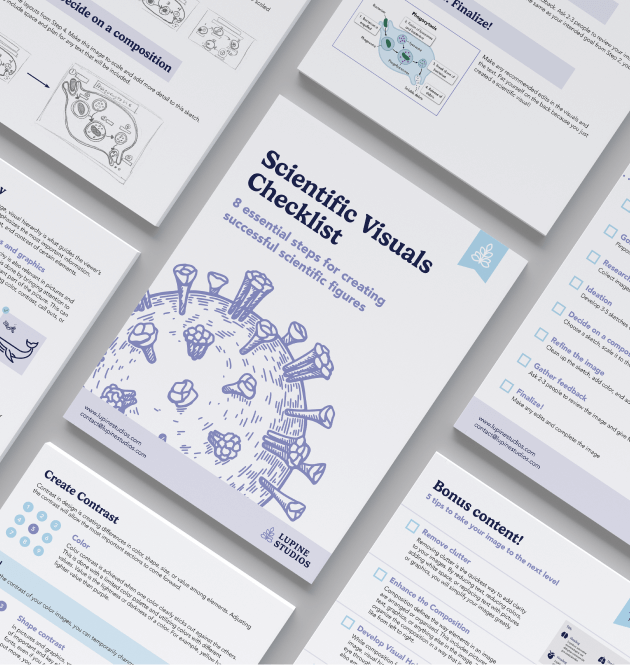
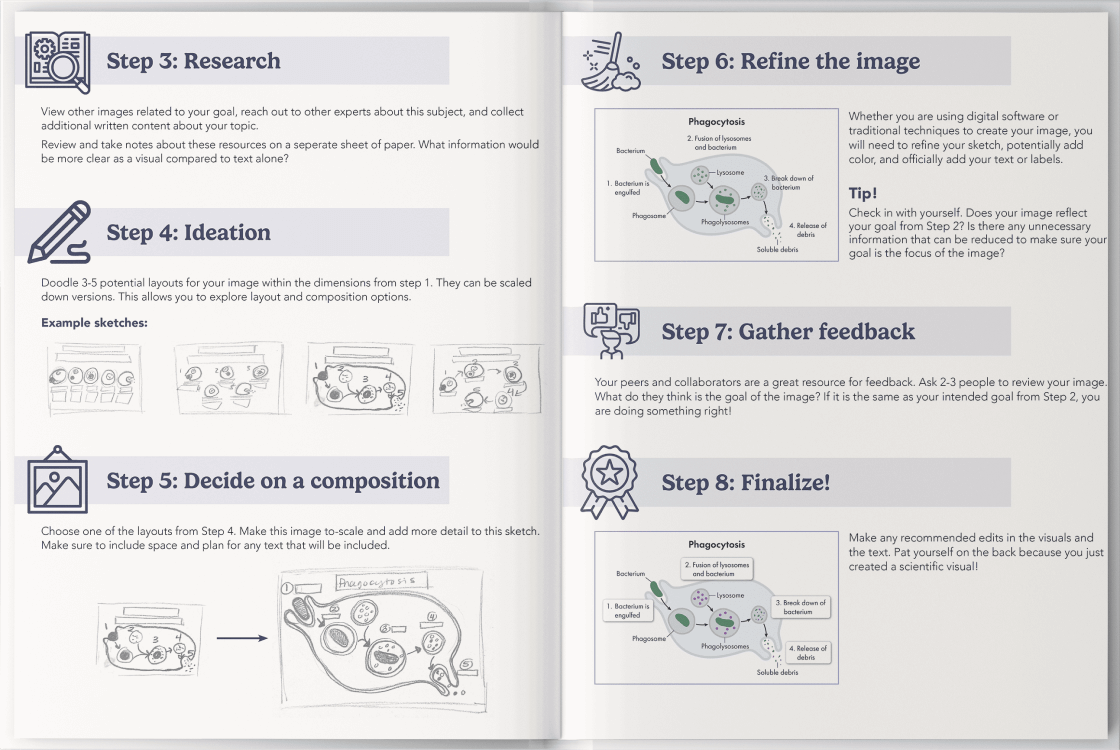
We offer a free scientific visuals checklist for download on our website. This includes 8 essential steps for creating a scientific illustration in an easy to understand format. We also post educational content on our blog and social media accounts. Finally, be on the lookout for our next Sci-Art Critique session where anyone can give and receive feedback from the scientific illustration community.

Level up your visuals with this easy-to-follow guide
Learn More about the Checklist
- How would you describe a typical day as a scientific illustrator?
- What drew you to this niche career?
- What did you do to prepare yourself for this career?
- Do you think you need a degree to be a scientific illustrator?
- What advice do you have for people who want to become scientific illustrators?
- How Lupine Studios is giving rise to the next generation of scientific illustrators